
UV Coating: Process, Benefits, Applications, and Types?
What is UV coating in print ?
UV coating in packaging UV coating is a high-end printing process in which a liquid coating is laid upon the surface of printed materials, including boxes, labels, or cards, and then immediately cured by ultraviolet (UV) light. This forms a glossy, clean, or even matte protective coating which adds to the look and life of the print.
Key facts concerning UV coating in packaging:? ?
-
Security:
UV coating ensures that the surface is not scratched, wet, and cannot experience small damage and wear, which contributes to the extended life of the packaging.
-
Visual Appeal:
Visual appears make prints look bright and shiny, which makes colors more vivid and the touch of quality.
-
Selective Application:
It can be sprayed on the full surface or select areas (spot UV) in order to emphasize some specific items, such as logos or images.
-
Fast Curing:
With the help of UV light, the coating is cured almost immediately, which makes it efficient in terms of high-volume production.
-
Material Compatibility:
It can be used with paper, cardboard, and some plastic materials, which are typically used in packaging products.
UV coating is popular as a luxury packaging, label, greeting cards, and promotional material due to the enhancement of both appearance and utility.
Types of UV Coating for Packaging?
There are various types of UV coating with regard to the finish and method of use. In packaging, there are the primary ones:
? ? ? ?Glossy UV Coating? ?
- Offers a reflective surface that is glossy.
- Improves the color and visuality.
- They are widely used to package high-end products to achieve a luxurious appearance.
Matte UV Coating? ?
- Gives a non-reflective finish that is smooth.
- Gets rid of glare, and is discreet and elegant appearance.
- Known as the producer of high-quality and less packaging designs.
Spot UV Coating? ?
- Only applied to particular parts of a print, e.g., logos, images, or text.
- This brings contrast to both coated and bare parts and adds depth and emphasis.
- Usually employed in the underlying of branding elements.
Textured UV Coating? ?
- The effect can be a touch effect, such as embossing or patterns.
- Provides a sensory experience to the packaging that may make it more memorable.
Soft-Touch UV Coating? ?
- Leaves a smooth velvety feel on the surface.
- Matte finish is often used together to create the luxury packaging.
These types can be combined with other options of finishing, which include embossing and foil stamping, in order to add more of the touch and feel of the packaging.
How UV Coating Enhances Product Packaging??
The use of UV coating as a finishing method in the packaging industry is widely adopted in the industry since the method enhances the look and the longevity of the printed materials. Packaging can be given a high-end appearance by using a liquid coating treated with ultraviolet light, which allows protection against wear and tear, as well as a special appearance.
-
Improved Visual Appeal? ?
Colors are provided with a glossy or matte look by UV coating, and this makes them more vivid and salient. The smooth or reflective surface will attract everybody in high-end products, and leave a luxurious impression. Spot UV could be used selectively to give contrast or depth to the design on the packaging by highlighting the logo, image, or other design features.
-
Enhanced Protection? ?
The coated surface gets a hard protective layer, thus rendering the packaging resistant to scratches, smudges, and even dampness. This is a guarantee of the security of printed graphics and text through the handling, shipping, and presentation process without damage to the product, and it creates a professional look through the lifecycle of the product.
-
Versatility in Design? ?
UV finish could be made in full, spot, or textured. Whole Surface Coating Coats the entire surface and is provided to emphasize the important parts besides highlighting them; Spot Coating Coats the important parts, with emphasis on the parts; Textured or soft-touch Coating Provides a feel to the surface. This is what makes the brands differentiated, as well as come up with packaging that will stand out on shelves.
-
Fast and Efficient Process? ?
Since UV coating is almost fully cured under ultraviolet light, this technique is very effective when used on a large scale. This will save lead time and enable printing of high volumes without loss of quality.
-
Premium Perception? ?
The UV-coated packaging of products is usually taken to be of higher quality or a luxurious product. The smooth, glossy, matte sophistication or feel is a way of attracting customers and marketing value to the brand.
How is UV Coating Applied ?
The process of coating the UV is represented by a number of exact procedures that allow achieving a smooth and long-lasting impervious coating and optical attractiveness on the printed packaging.
Surface Preparation? ?
Checking and cleaning of the printed material is also performed before coating to eliminate dust, oils, or any other contaminant. A clean surface implies that the UV coating must not fall out of place, and no flaws can be created.
Application of the Coating ??
The coating liquid of UV is applied to the face of the printed material. This has been achieved in two broad ways:
-
Full Coating:
This is where the whole surface is covered with a uniform amount of coating.
-
Spot Coating:
The coating is done only on specific sections (logos or pictures) as a way of highlighting and contrasting.
Curing with UV Light?
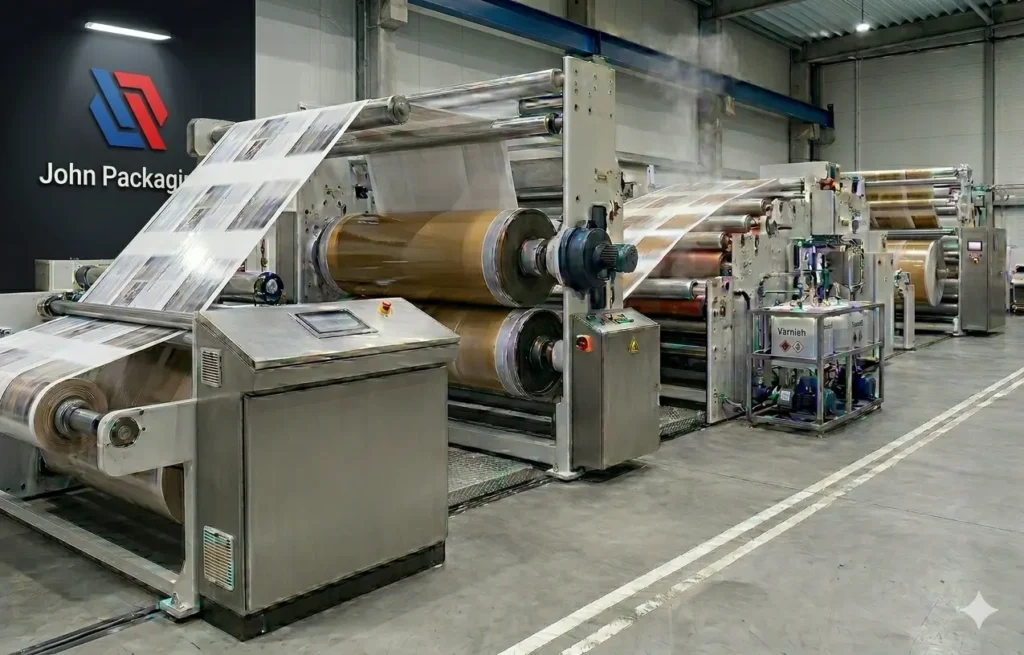
As soon as it has been applied, the coating is subjected to ultraviolet (UV) light. The rays of UV cure the liquid immediately and make it harder and more protective. The step makes it dry fast and increases durability.
Quality Inspection ??
Once the material has been cured, it is verified in terms of uniformity and shine as well as adherence. Any imperfection is rectified, and the packaging passes through another processing stage, like cutting, folding, or assembly.
Optional Finishing Effects? ?
More effects like textures or soft-touch finishes could also be incorporated to make a unique tactile experience or high-end visual appeal.
Advantages of UV Coating? ?
-
Enhanced Appearance?
UV coating gives the packaging a glossy, matte, or textured look, which makes the packaging stunning to the eye. Spot UV can draw emphasis on logos or images to have a high-end effect.
-
Improved Durability? ?
The sealed coating helps in stopping packaging scratches, smudges, and moisture, and thus remains professional-looking throughout its lifecycle.
-
Fast Curing Process ? ?
The coating is cured by UV light in almost seconds, enabling high-volume production without slowing down the printing process.
-
Design Flexibility ? ?
UV can be coated fully or in part (spot UV) or be textured to provide creative flexibility to add to branding and customer experience.
-
Premium Perception? ?
One of the ways that products are differentiated on a shelf is by having products that are UV-coated in packaging, thus giving the product a perception of quality or luxury.
Disadvantages of UV Coating? ?
-
Higher Cost? ?
In comparison to other coatings, such as aqueous or varnish, UV coating may prove to be more costly based on the cost of materials and special machines.
-
Limited Compatibility ? ?
Certain paper material or plastic material might not bond well with UV coating, and needs to be tested first, before production on a large scale.
-
Environmental Concerns ?
UV finishing uses chemical finishes and high-energy curing, which can have higher effects on the environment than water-based finishes.
-
Difficult to Write On ? ?
The smooth finish of UV-coated packaging may make it challenging to write with your pens or markers, and this may be a constraint to some uses.
-
Potential for Yellowing? ?
Through time, the visual appeal of UV coating on some materials would change slightly and turn to yellow, particularly when dealing with light colored packaging.
Aqueous Coating as compared to UV Coating?
Aqueous Coating? ?
Aqueous coating refers to water coating, which makes the printed packages appear soft, satin, or lightly glossy. It is air or heat-dry and offers an average type of moisture and scratch resistance.?
Advantages:? ?
- Economical and friendly to the environment.
- Adapts to the majority of paper stocks.
- Simple to write on and hence useful in packaging on a daily basis.
Common Uses:
Where medium protection and low profile finish are needed, magazines, brochures, general product boxes, and packaging.
UV Coating
The curing of UV coating is done immediately with the aid of ultraviolet light, thus creating a very tough finish that shields the packaging from scratches, smudges, and moisture. It may be used in full, spot, or textured finish and may be glossy, matte, or touchable.
Advantages:? ?
- Delivers bright and attractive colors.
- Spot UV allows the spot UV to be highlighted selectively.
- Brings a high-end, luxurious experience to packaging.
Considerations:? ?
- More costly and will need special equipment.
- Will not stick to paper and plastic very well.
- Slick paper is not easy to write on.
Common Uses:? ?
Luxury package, promotional devices, labels on the product, and those that require visual appeal and longevity.?
FAQs: ?
Does UV coating need special equipment? ?
Yes, there should be specific UV-cured machines. They are used to making the coating hard immediately so that it is durable and of good quality.
Can UV coating be textured? ?
Yes, UV coating with a texture brings the feel to the packages. This improves the sensory experience for consumers.
Is it possible to apply UV coating to flexible materials? ?
It applies to flexible materials, but adhesion tends to be stronger on rigid materials. The best results are achieved through testing.
Does yellowing of UV occur over time? ?
The yellowing of some UV coats, except for light colored surfaces, can be natural wear and tear. Good-quality coats minimize the chances of discoloration.
Is UV coating expensive? ?
Aqueous coatings are usually cheaper than UV coatings. This is so because special materials and curing machines are needed.?