What is Aqueous Coating in Printing?
Aqueous coating is a print coating used on printed paper or on cardstock, composed of water, which assists in covering the paper or cardstock, besides adding to its appearance. It is a paper coating that gives a protective layer, which is very thin, and protects against smudges, fingerprints, and minor scratches without leaving a printed look or a dirty look.
Aq coating is commonly used in brochures, postcards, catalogs, and packaging in commercial printing. Its use in card coating is effective, as it extends card life without altering the paper’s natural feel. The aqueous coating dries faster than traditional varnish or varnish printing, and it can also be used to produce many units in a short period.
There are different finishes for aqueous coatings, including matte, satin, and gloss. A non-shiny aqueous surface is known as matte, and a glossy aqueous surface is applied to make colors appear brighter. Satin has a water-based coating that provides a matte-to-gloss finish between matte and gloss.
Comparison of aqueous and UV coating. The main difference between the two is the process of curing and coating thickness. Coatings available in UV and aqueous give a more glossy and thicker finish, respectively, and so aqueous coatings are more commonly used and tend to be a decent option for everyday printing work.
Advantages of Aqueous Coating in printing
Enhanced Protection
Aqueous coating involves a fine, smooth coating of print that creates a thin water-based protection coating to cover the materials that have been printed against smudges, fingerprints, and small scratches. It is in place to ensure that brochures, postcards, catalogs, and packaging always look professional during handling and distribution.
Improved Appearance
Satin, matte, and gloss aqueous finishes are used to bring in the color of vibrancy and attractiveness. The finishing will sharpen the images and polish the printed materials to a high-quality look.
Efficient and Fast Production
Contrary to conventional varnish printing, or varnish coating, aq coating does not take long to dry, either by air or using heat-aided dryers. It is fast, making it suitable for large print runs and projects with deadlines.
Structural and Materials
Aqueous coatings in printing can be applied to diverse paper and cardstock types and provide robust card and paper coatings for multiple products.
Eco-Friendly Option
Aqueous coatings are inherently environmental since they are water-based and thus are safer than solvent-based or certain types of UV coatings, and as such are a viable option to sustainable printing.
Cost-Effective Solution
Aqueous coating provides a sure and appealing finish as compared to UV coating without the use of special equipment to cure it, and with low production costs.
Different Types of Aqueous Coating Finishes
Different finishes are applied via aqueous coating to produce specific visual and protective effects on printed materials. All forms of aqueous coating provide a distinct appearance and serve as protective print coatings for paper and packaging products.
Matte Aqueous Coating
Matte aqueous coating produces a smooth, matte surface. This finish should reduce glare and give printed materials a smooth, professional finish. This paper coating is also used in packaging brochures, book covers, and high-end packaging.
2. Gloss Aqueous Coating
Gloss aqua can be used to create a wet finish that makes colors brighter and finer. This kind of aq coating is normally applied to marketing materials, postcards, and packaging of products that need a colored finish. That will also add another level of security by applying a durable finish on the card.
3. Satin Aqueous Coating
Satin’s aqueous coating also provides a matte and gloss finish. It is neither too reflective nor too opaque, with a slight gloss that is suitable for various commercial print coating applications. It is the most popular finish used when a sophisticated appearance is required without the glossy texture of a gloss-coated paper.
Uses of AQ Coating in Commercial Printing
Marketing Materials:
Applied to brochures, flyers, postcards, and catalogs to make them look better and prevent the destruction of printed materials.
2. Packaging:
It is applied to the boxes, cartons, and even wrappings of products to give them a coating that does not allow any scratches or even a smudge.
3. Card Stock:
This is a card coating applied to business cards and invitations, as well as postcards, to make them easier to hold.
4. Custom Finishes:
It offers matte, satin, and gloss aqueous coatings to create the required vision.
5. Commerciality and Effectiveness of Printing:
Fires quickly compared to the varnish printing or varnish coating, and therefore is quicker to print.
6. Substitutes of UV:
aq coating, UV coating, or aqueous coating, or UV coating. It has a smooth protective coating that is not thick and has a lustrous gloss of a gloss-coated paper.
7. Everyday print protection:
Coats the paper to prevent smudges, fingerprints, and minor damages without making it look like somebody has rested on it.
Step-by-Step Aqueous Coating Process
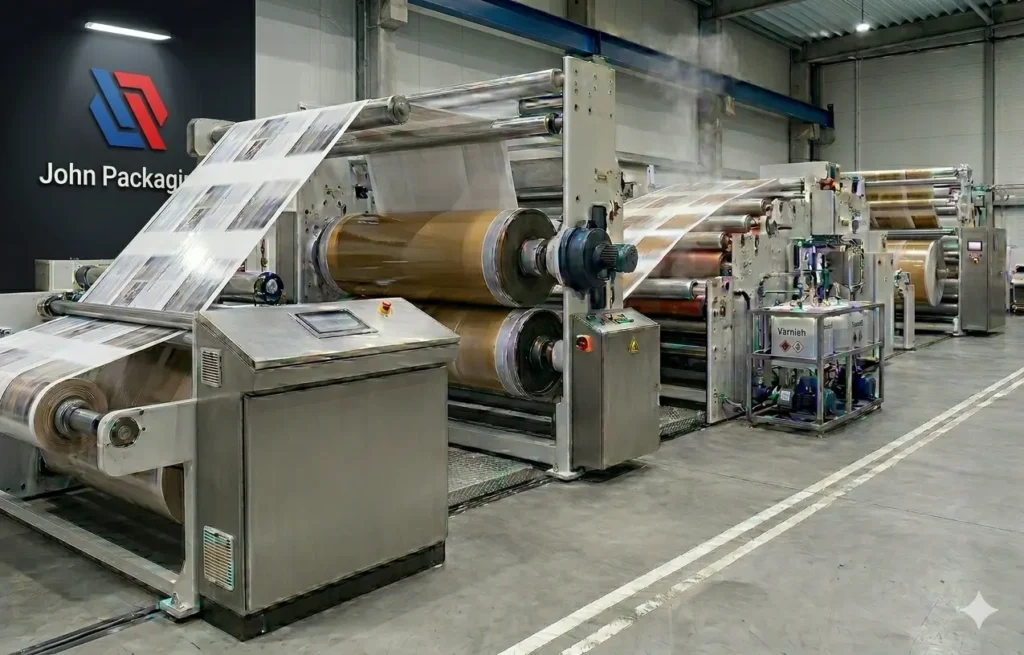
The aqueous coating in the printing process begins after the sheets are printed and are ready to be finished. The printed materials are arranged and then prepared for coating. A water-based print coating is then sprayed or rolled onto the surface.
It is after the printing that aqueous coating commences, and it is not after it has been finished. The printed materials are set, and the coating is subsequently done. A print coating consisting of water is then sprayed or rolled onto the surface.
There are many variants of the desired finish to be achieved on the printers, such as matte, satin, and gloss aqueous. The aq coating is fast to dry once applied: it has been known to form a thin coating of protection against smudges, fingerprints, and minor scratches, with the help of air or heat-assisted dryers.
This is much more economical and quicker than conventional varnish printing, and the results are reliable throughout the large printing. In comparing AQ coating with UV coating, one can say an aqueous coating offers a smooth finish without creating a thick reflective look as gloss-coated paper would offer. Aqueous coating gives a smooth surface to the brochures, postcards, catalogues, and packaging materials.
Aqueous Coating as compared to UV Coating
Definition and Composition
The water-based coating is called an aqueous coating, which is applied to the print after printing to give it a protective film and to also beautify the surface. UV coating, on the other hand, is a liquid coating, which is cured in the ultraviolet light that forms a more glossy and thicker coating onto the printed piece.
Finish and Appearance
Matte aqueous finish is a protective finish that is offered in a translucent finish that does not in any way affect the natural feel of paper. In comparison, UV coating provides the process with a high gloss reflective finish to colors, thus they become thicker and less flexible.
Liquidity and Economy of Production
AQ coating may be dried either by air or with the use of heat-assisted dryers, and, as a result, is fast to handle in the production process, and allows large print quantities to be produced. UV coating is not only costly and time-consuming to cure, but it also slows production.
Durability and Usages
Whereas an aqueous coating might be applied in printing to prevent smudges, fingerprints, and tiny scratches, a UV coating is stronger and less vulnerable to scratches on the surface. Aq coating is, however, popularly used in the printing of brochures, postcards, and packages where one does not require the thickness of gloss coating paper to attain the appearance of a high shine.
Summary
Depending on the requirements of the project, the AQ or UV coating is developed. Quick and efficient finishes. Aqueous finishes are most suitable for giving a fine finish and are the most efficient finishes. By comparison, UV finishes apply in cases where a high-impact, glossy finish is required, and extra surface strength is required.
FAQs:
Is it the purpose of coating to be decorative?
No, coating is used for either aesthetic or functional purposes. They cover the printed surface and improve the appearance of the material.
Is it possible to write on coated materials?
A certain coating forms a resistant surface that might have an impact on writing. Testing should be done in case of handwriting or annotations.
What is the impact of coating paper?
The paper can be smooth or, in some cases, soft to the touch due to the coating. This increases the feel of printed materials.
How does the effect of the coating affect shipping durability?
The surfaces are coated to avoid scratches, scuffs, and minor damage in handling. This will ensure that there is a good reception of marketing materials or packaging.