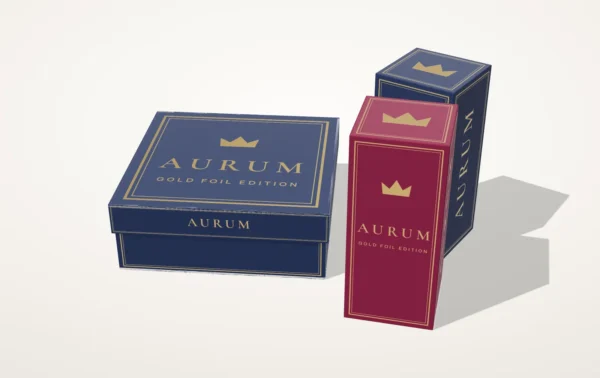
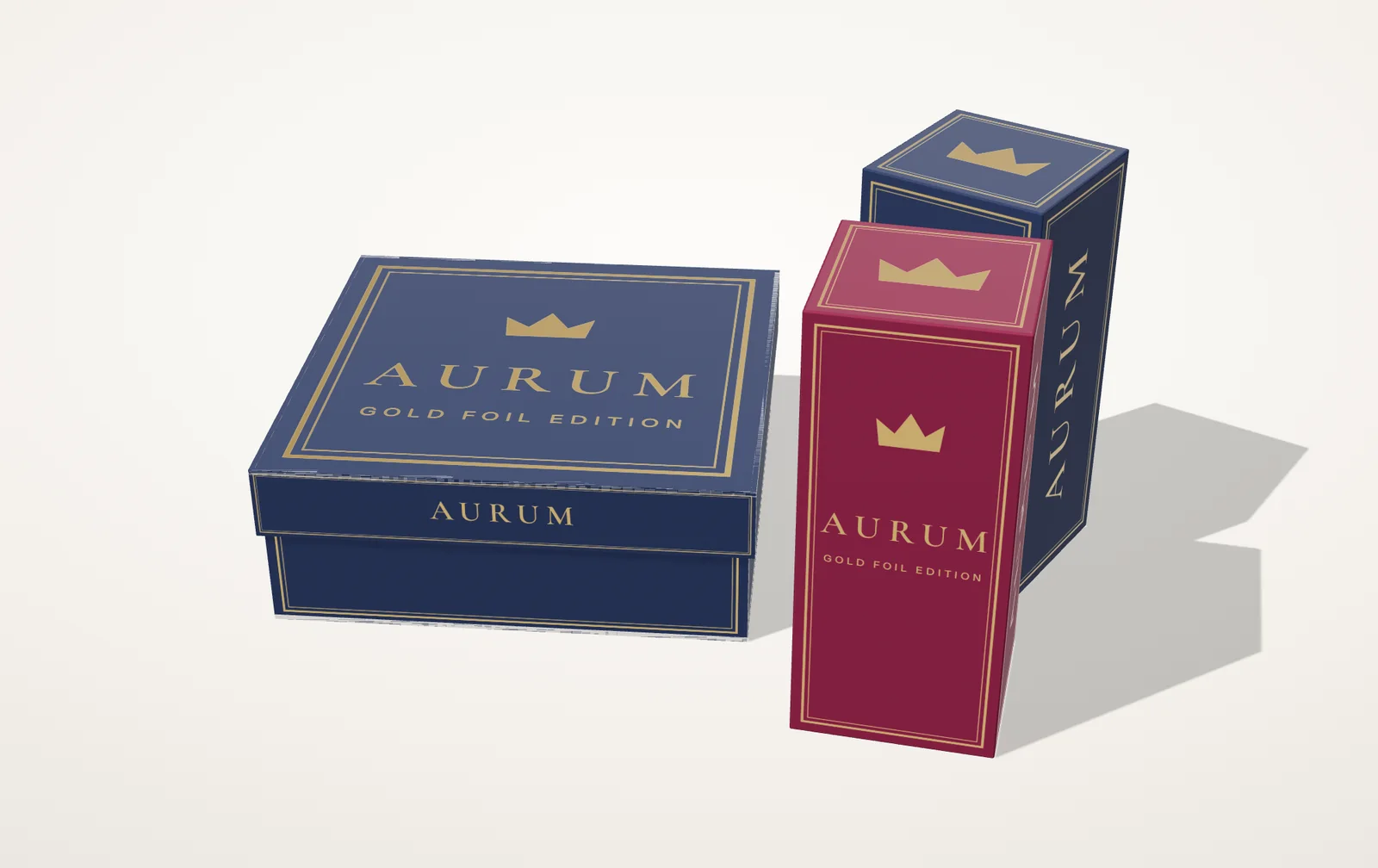
Foil stamping is one of the fastest ways to make a box look premium. A thin layer of metallic or colored foil is pressed onto the board with heat, leaving a bright, reflective logo or pattern that catches the light. Brands in cosmetics, fragrance, chocolate, jewelry and gifts use it to signal quality before the box is even opened.
This guide explains how foil stamping works, which foils you can choose, where it works best and how to prepare your artwork.
What is foil stamping?
Foil stamping, also called hot foil stamping, uses a heated metal die shaped like your design. The die presses a roll of foil against the box surface. Heat and pressure release the foil from its carrier film, and it bonds to the board only where the die touches. The result is a crisp metallic area that sits flat on the surface or slightly pressed into it.
Unlike metallic ink, foil is a solid layer of metal-look material, so it reflects light like a mirror. That is why foil logos look noticeably brighter than printed gold or silver.
Types of foil
Metallic foil
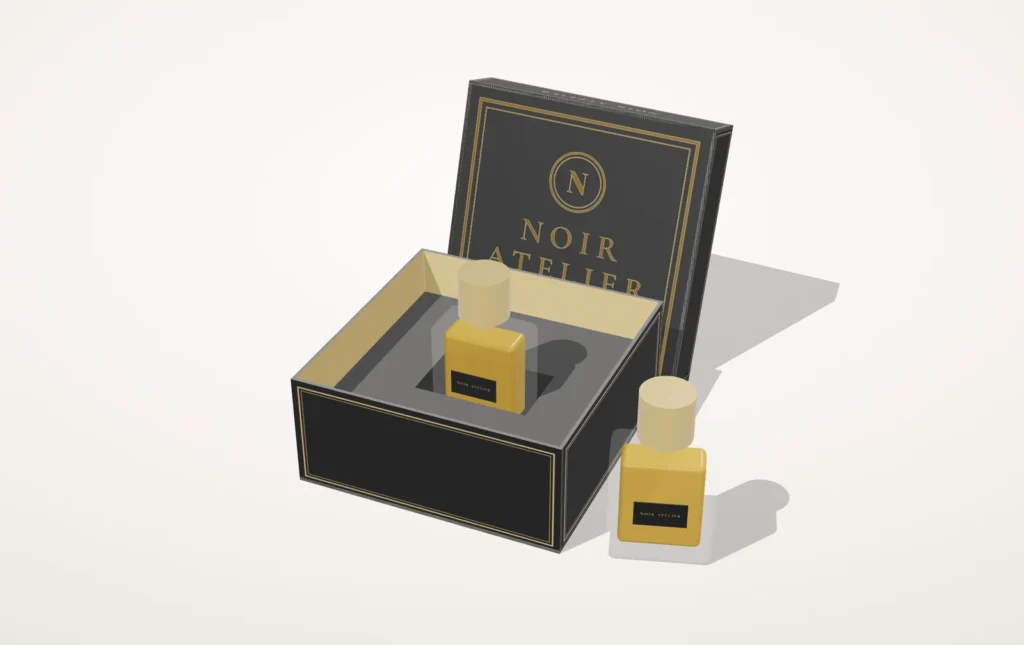
Gold, silver, rose gold and copper are the most popular choices. Gold suits luxury and heritage brands, silver suits modern and tech brands, and rose gold is common in beauty packaging.
Matte and satin metallic foil
These foils have the metal color with less shine. They look refined and are easier to read under bright store lights.
Pigment foil
Pigment foils are solid, non-metallic colors such as white, black or red. They give a very opaque color on dark or kraft board where ink would look weak.
Holographic foil
Holographic foil shows a rainbow effect that changes with the viewing angle. It is popular for limited editions, cosmetics and youth brands.
Foil stamping combined with other finishes
- Foil and embossing: the logo is raised and foiled in one look, which is very common on rigid gift boxes.
- Foil on soft-touch lamination: a velvet matte surface with a bright foil logo gives strong contrast.
- Foil and spot UV: foil for the logo and spot UV for a pattern or secondary detail.
Where foil stamping works best
- Logos and brand names on the lid or front panel
- Borders, frames and thin decorative lines
- Small icons, seals and edition numbers
- Patterns on rigid boxes and two-piece boxes
Foil works on paperboard, kraft and the wrapping paper of rigid boxes. It looks best on smooth, laminated surfaces. On textured papers the foil can break up, so test on a sample or ask us to check your paper choice.
Design tips for foil stamping
- Use vector artwork. Supply the foil area as a separate vector layer or spot color named “Foil” in your file.
- Avoid very fine detail. Lines thinner than about 0.3 pt and very small text can fill in. Keep text at 6 pt or larger.
- Keep foil away from folds. Foil can crack on a fold line, so leave a small gap around creases.
- Do not combine large solid foil areas with tight registration. Foil is applied after printing, so allow a little tolerance when it must line up with printed elements.
- Use contrast. Gold on black, navy, burgundy or deep green looks richer than gold on white.
How much does foil stamping cost?
Foil adds a one-time cost for the metal die plus a small cost per box. The die is the larger part on short runs, so the price per box drops quickly as quantities grow. One foil color on one panel is the most cost-effective way to use it. Each additional color or panel needs another pass.
We include foil on your quote when you tick “Foil stamping” in the quote form, and you will see it on your digital proof before production.
Foil stamping FAQs
Is foil stamping the same as metallic ink?
No. Metallic ink is printed and has a softer shine. Foil is a separate layer that reflects light much more strongly.
Can you foil stamp kraft boxes?
Yes. White, gold and black foils look great on natural kraft boxes.
Is foil recyclable?
Foil is a very thin layer, and boxes with small foil areas are generally accepted in paper recycling. If recyclability is a priority, keep foil areas small.
What is the minimum order for foil boxes?
Foil is available from our standard minimum of 50 units.